
Companies purchasing barcode verification equipment for the first time often find the range of models and standards confusing. How do linear, 2D and DPM verification differ? Can one instrument test them all? This guide compares the three verification types, their international standards and typical applications to help you make an initial selection in ten minutes.
1. A successful scan does not prove that a barcode meets quality requirements
An ordinary barcode scanner answers one question: can the code be read? A barcode verifier measures its quality. It scores parameters such as contrast, modulation, defects and quiet zones against international standards, producing one of five grades: A, B, C, D or F.
A barcode that scans today may fail after a batch change, with another scanner or on another production line. Grading provides the basis for consistent readability throughout the supply chain. This is why major retail channels and the pharmaceutical and automotive industries use grading reports as acceptance evidence.
2. Three verification types and their international standards
| Verification type | Common symbologies | Typical substrate or marking method | International standard | Corresponding Chinese national standard |
| Linear barcode verification | EAN-13, UPC, Code 128 and others | Printed labels and cartons | ISO/IEC 15416 | GB/T 14258 |
| 2D barcode verification | QR Code, DataMatrix | Printed labels and inkjet codes | ISO/IEC 15415 | GB/T 23704 |
| DPM verification | Mainly DataMatrix | Laser-marked, dot-peened or etched metal and plastic components | ISO/IEC TR 29158 (AIM DPM) | — |
The three standards are not interchangeable. DPM (direct part marking) requires particular care: laser-marked or dot-peened codes on metal or plastic often have low contrast and reflective surfaces. Applying the general 2D standard ISO/IEC 15415 may produce an inappropriate assessment. ISO/IEC TR 29158 specifies dedicated illumination and grading methods for DPM, and is commonly required in customer audits in automotive components and electronic components.
3. Understanding grades: C is a common acceptance threshold
All three standards use five quality grades from A (4.0) to F (0). Common practice is to require C (1.5) for general retail packaging. Pharmaceutical, automotive and electronics applications often call for better than C, and some customers require B. A grade of 1.5 (C) is also frequently used as a baseline for medical-device Unique Device Identification (UDI) applications. Confirm the customer's or industry's required grade before purchasing equipment.
4. Choose an instrument for the working environment
| Application | Instrument format | Corresponding REA model from Germany |
| Laboratory or quality department, mainly linear barcodes | Benchtop verifier | PC SCAN / LD4 |
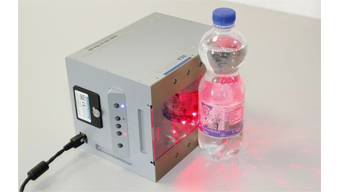
| Laboratory or quality department, mainly 2D barcodes | Benchtop verifier | VeriCube |
| DPM codes on metal or plastic components | Dedicated benchtop DPM verifier | VeriCube DPM |
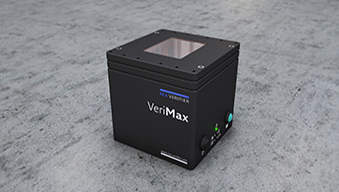
| In-line inspection of every item on the production line | In-line system | VeriMax Inline |
| Warehouse, incoming inspection or sampling across workstations | Mobile system | VeriMax Mobile |
A laboratory testing both linear and 2D barcodes can configure the relevant verification heads on a benchtop system rather than buy two instruments. For DPM codes marked directly on metal or plastic components, a separate DPM verification configuration compliant with ISO/IEC TR 29158 is recommended.
5. Common selection questions
Can a scanner replace a verifier? No. A scanner only reads the code and cannot produce a grading report. Customers generally do not accept a successful scan as evidence for acceptance inspection or audits.
We have both paper labels and marked metal components. How many systems do we need? VeriCube can cover linear and 2D barcodes on labels. VeriCube DPM is recommended for metal DPM components. The standards and illumination conditions differ, so separate configurations are recommended.
How long does one verification take? A benchtop measurement typically takes only a few seconds. Placing the sample produces a grading report and detailed parameters that can be printed or exported for archiving.
Does the equipment require regular calibration? Yes. Verifiers are supplied with a reference calibration card. Follow the manufacturer's calibration schedule. APL provides calibration and annual maintenance services.
6. Making the final choice
Selection comes down to three questions: which codes you need to test (linear, 2D or DPM), where testing takes place (laboratory, production line or in the field), and which grade is required. Share those answers with us for model recommendations and quotations. APL Technology in Beijing is a long-standing partner of REA in Germany, providing equipment sales, training, calibration and repair. Call 010-83682408 or leave an online enquiry.
Related products: PC SCAN / LD4, VeriCube, VeriCube DPM, VeriMax Inline, VeriMax Mobile